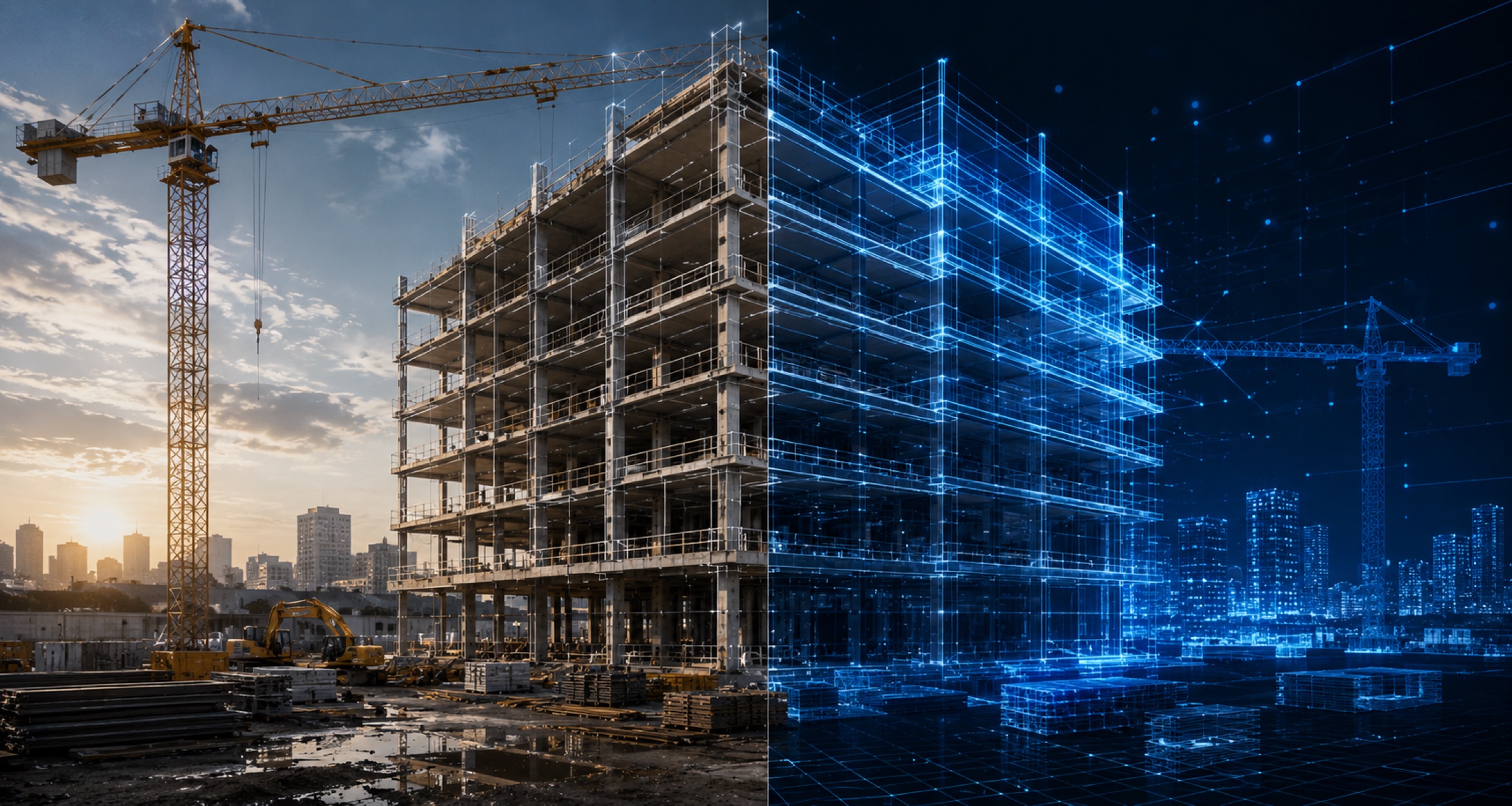
A digital twin in construction is a measurable 3D virtual replica of a site, built from capture data and updated as the site changes. Unlike a folder of photos, it's geo-referenced and time-aware — so you can measure it, compare dates, and detect deviations from design.
Twin vs. a pile of photos
Photos show you a moment; a twin lets you interrogate it. Because it's geo-referenced, you can pull distances, areas and volumes. Because it's time-aware, you can stand in the same spot across dates. That's the difference between documentation and intelligence.
How it's built
Captures — aerial for exteriors, walkthroughs for interiors — are processed into models, orthomosaics and pinned panoramas. Each capture is a dated layer, so the twin accumulates a full history of the build.
What teams do with it
Track progress, measure quantities, overlay CAD to compare as-built against design, and keep a permanent, defensible record of what was built when. Increasingly, AI reads the twin to report progress automatically.
Key takeaways
- A digital twin is a measurable, time-aware replica of a site
- Geo-referencing makes it measurable; dated layers make it comparable
- Built from aerial and interior captures processed into models
- It's the foundation AI reads to automate progress reporting