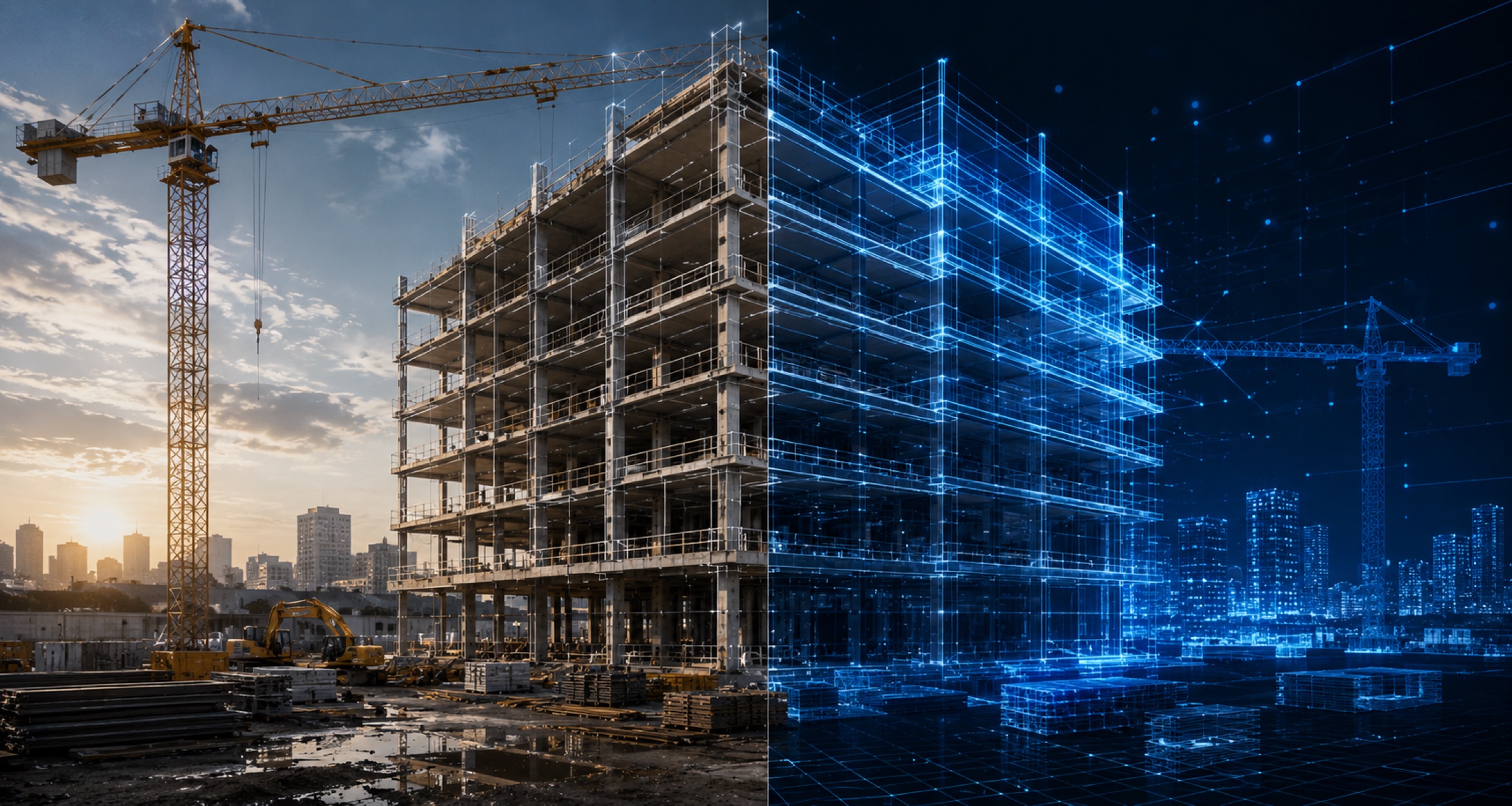
BIM is the design-intent model of what should be built; a digital twin is the as-built mirror of what actually exists on site, captured over time. They're complementary — the real power is comparing your BIM against the captured twin to spot where reality diverges from design.
BIM: the plan
BIM is authored during design — a rich model of intended geometry, systems and data. It answers 'what are we supposed to build?' but on its own it doesn't know what's actually happening on site.
Digital twin: the reality
A digital twin is captured from the physical site and updated over time. It answers 'what actually exists, right now, and how has it changed?' It's grounded in measurement, not intent.
Better together
Overlay the two and you get BIM-vs-reality comparison: deviations, clashes and progress against design, surfaced automatically. That's where the two models stop competing and start compounding.
Key takeaways
- BIM = design intent; digital twin = captured reality
- BIM is authored; a twin is measured and time-aware
- BIM-vs-reality compare surfaces deviations and progress
- The two are complementary, not competing